
Overwatered vs. Underwatered Plants: Read the Soil and Leaf Pattern
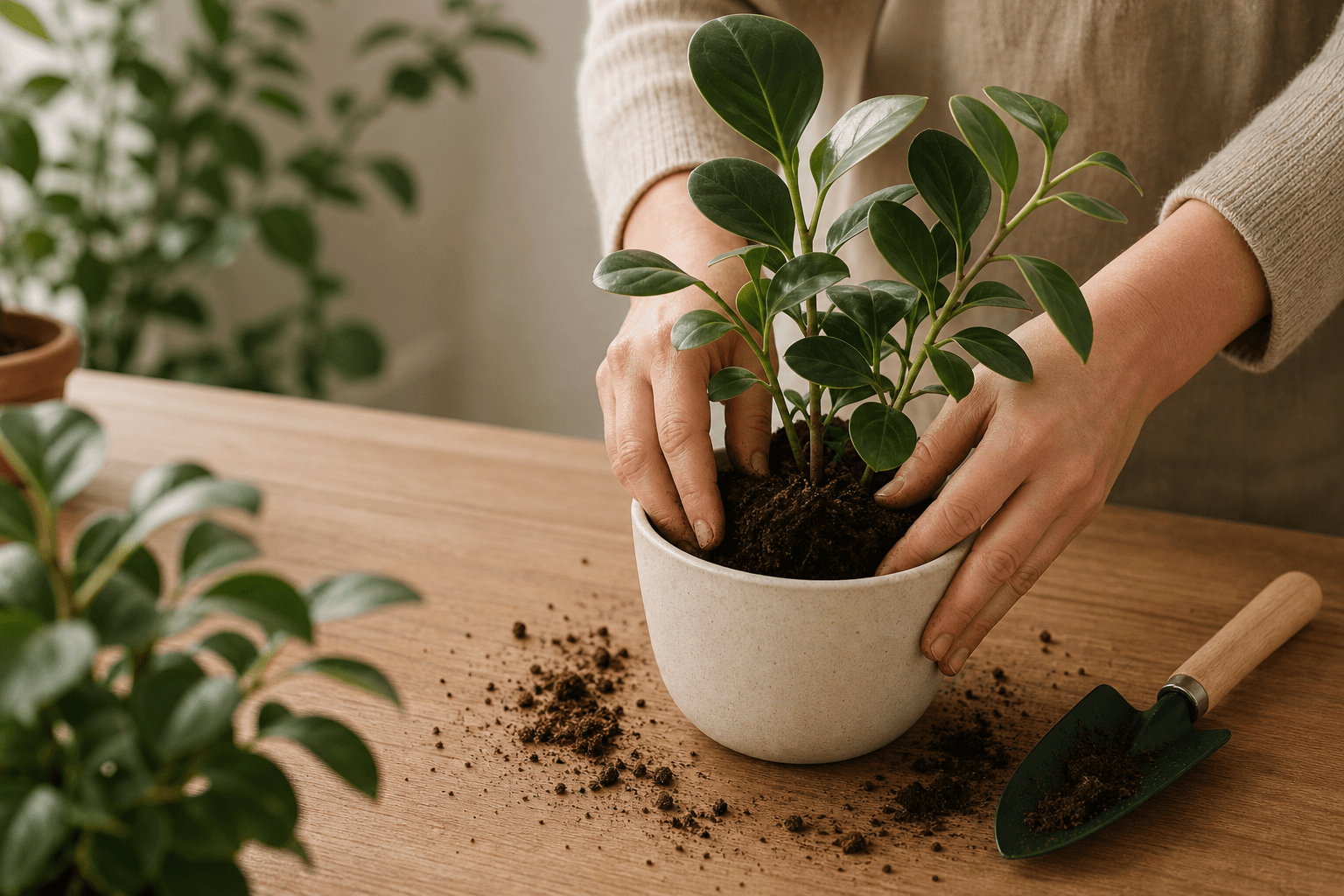
Do not diagnose overwatering or underwatering from a drooping or yellow leaf alone. Check the potting mix below the surface and compare the pot's weight: wet mix plus wilting or yellowing points toward excess moisture; dry mix plus a lighter pot, curling, wilting, or browning points toward drought. Because wilting occurs in both, confirm drainage and inspect roots when wet-soil evidence persists.
A drooping or yellow leaf can make the watering problem look obvious. It is not. University of Maryland Extension lists both excess water and drought among common indoor-plant stresses, and notes that an overwatered plant can wilt too. Read the soil, pot, and roots together before changing the routine.
What is the quickest reliable comparison?
Use this table as a set of clues, not a one-symptom diagnosis:
| What you observe | More consistent with excess moisture | More consistent with drought | What to verify |
|---|---|---|---|
| Potting mix below the surface | Still wet when you expected it to begin drying | Dry at the depth appropriate for the species | Test below the surface rather than judging by color alone |
| Pot weight | Has not become lighter as the mix dries | Noticeably lighter than after a thorough watering | Learn the same pot's wet and dry weight over time |
| Leaves | Yellowing, leaf drop, or wilting can occur | Wilting, curling, gray-green color, browning, scorch, or leaf drop can occur | Look for a pattern across the plant, not one leaf |
| Drainage | Water remains in the saucer or cannot leave the container | Mix may pull away from the pot after severe drying | Confirm open drainage holes and inspect the mix |
| Roots, when inspection is warranted | Dark, soft roots point to root disease or decay | Dry soil alone does not establish root damage | Healthy roots are generally light-colored and firm |
The overlap matters. Yellow leaves do not prove overwatering, and wilt does not prove underwatering. Drought, excess water, unsuitable light, poor potting media, roots, salts, pests, and other conditions can produce similar foliage changes.
How do you check the potting mix instead of guessing?
- Identify the plant if you can. A moisture check is only the starting point; species differ, and succulents and cacti are exceptions to rules that fit many foliage plants.
- Check below the surface. University of Maryland Extension suggests testing about two inches deep for most indoor plants. A wooden dowel can help in a large pot: moist mix sticks to or darkens the dowel.
- Lift the pot. Potting mix becomes lighter as a plant uses water. Comparing the same container just after watering and later in the cycle gives you more useful evidence than a calendar date.
- Inspect the drainage path. Water should be able to leave through the bottom. Empty a cachepot or saucer rather than leaving roots standing in collected water.
- Review recent conditions. Potting mix, pot type, humidity, temperature, and growth stage all change how quickly a plant uses water.
For a guided version of this sequence, use the free plant care check. It keeps the result conditional and does not collect your answers.
What should you do when the evidence points to dry soil?
If the mix is dry at the appropriate depth, the pot is lighter, and the plant shows drought stress, water thoroughly enough for water to drain from the bottom. Then empty the saucer.
Very dry potting mix can pull away from the side of the container and may need more than one slow application to rehydrate evenly. Do not turn that into a universal interval for the next watering. Return to soil and pot-weight checks because temperature, humidity, the container, and the plant itself keep changing the drying time.
What should you do when the evidence points to wet soil?
If the mix remains wet, do not add water just because the plant is drooping. Remove any standing water and confirm that the container can drain. A plant that wilts while the mix is wet needs a root and drainage check, not another automatic watering.
Healthy roots are generally light-colored and firm. Dark, soft roots are evidence of a root problem. Root symptoms can require a more specific diagnosis, so use plant-specific extension guidance or ask a local extension office before applying a treatment you cannot support.
Which leaf patterns are useful—and which are not?
- Wilting is shared evidence. Too little water can reduce the moisture reaching stems and leaves; too much water can damage roots and produce the same visible result.
- Yellowing is a stress signal. Excess water is common, but drought, light, media, roots, and pests are also possible.
- Curling, browning, scorch, and leaf drop strengthen a drought hypothesis only when the mix is also dry. Those leaf changes are not a substitute for checking the container.
- Dark, soft roots strengthen a root-problem hypothesis. They are more specific than a single yellow or drooping leaf.
If the plant also has webbing, sticky residue, bumps, visible insects, spots, distorted growth, or a recent temperature or light shock, widen the investigation instead of forcing the problem into a watering label.
Turn one observation into a better record
Write down the date, moisture depth, pot weight, leaf pattern, drainage condition, and what you changed. “Mix still wet below the surface; pot has not lightened; two leaves yellow” is more useful than “looked overwatered.” A short record also helps you compare the next check without reproducing the full contents of a paid planner.
For a repeatable routine, read how to schedule the check instead of the watering. If a paper record fits your process, browse the current plant-care planners and growth trackers; product details, availability, and checkout remain on Etsy.
The takeaway
Do not make the next watering decision from a leaf alone. Check moisture below the surface, compare pot weight, confirm drainage, and inspect roots when persistent wetness and wilting occur together. Respond to the combined evidence, then record what changes so the next decision starts with your plant's actual pattern.
Quick answers
- Can overwatered and underwatered plants both wilt?
- Yes. University of Maryland Extension lists both overwatering and lack of water as possible causes of wilting. Check moisture below the surface, pot weight, drainage, and root condition before choosing a response.
- Should I water a drooping plant right away?
- Not until you check the potting mix. If it is dry at the depth appropriate for the species and the pot is lighter, watering may be due. If it is still wet, adding water can compound an excess-moisture or root problem.
- How long should soil dry after overwatering?
- There is no safe universal number of days. Drying speed changes with the plant, potting mix, pot, humidity, temperature, and growth stage. Empty standing water, confirm drainage, and recheck the mix instead of watering by a fixed countdown.
Sources consulted
The editorial team used the following university extension, government, or official platform documentation for the factual guidance on this page. Plant needs still vary by species and growing conditions.