
Root Rot or Dry Soil? What the Roots, Soil, and Pot Can Tell You
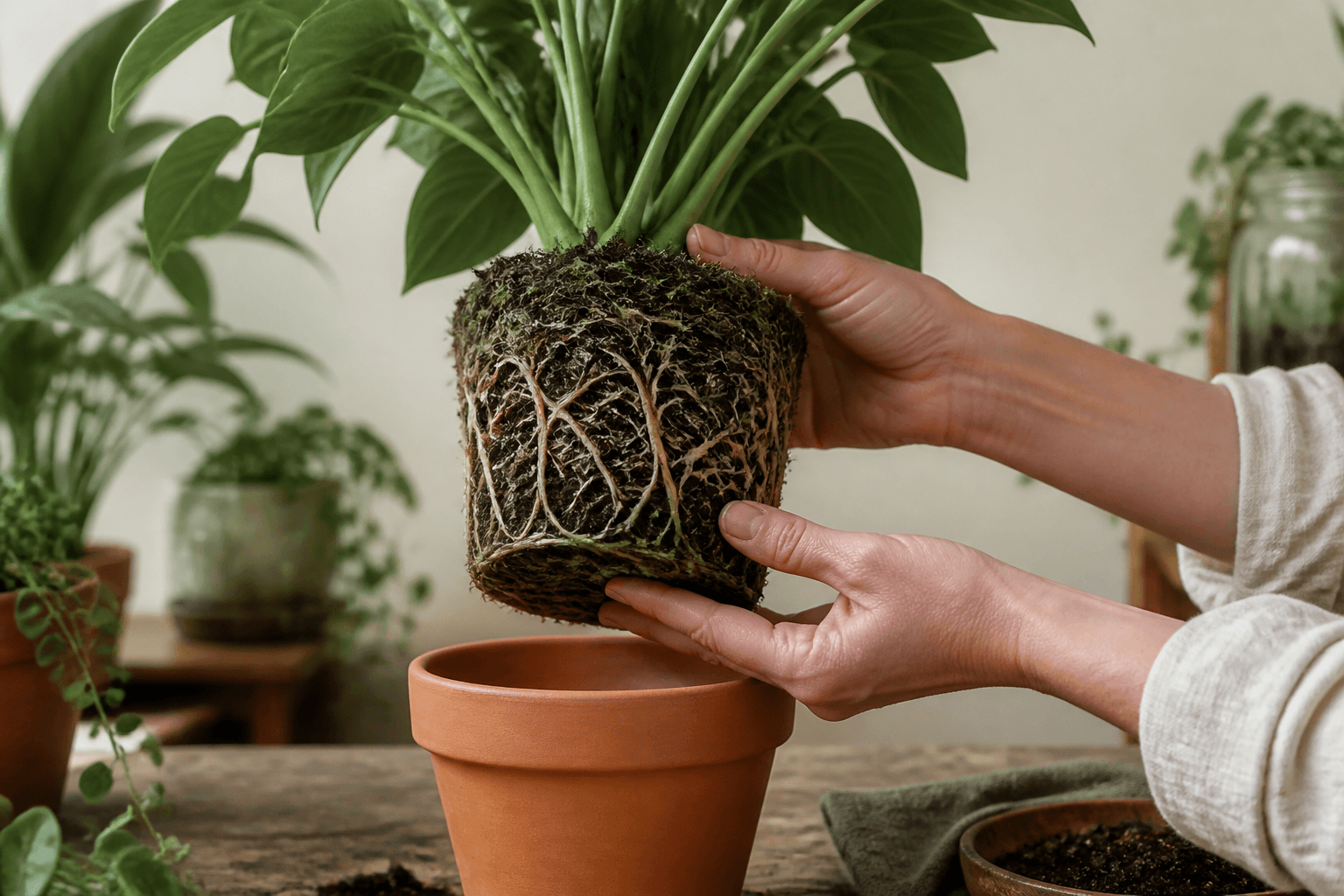
Wilt and yellow leaves do not prove root rot. Check mix, pot weight, and drainage first. Dry, light mix supports a dry-side issue; wet mix with dark, soft roots supports damage. An Extension lab may be needed to name the cause.
Root rot and dry soil are not clean opposites that can be identified from foliage. A thirsty root ball can make leaves wilt, but damaged roots can produce the same symptom while the mix remains wet because too few functioning roots can supply the plant. Use the pot's moisture history and the root system together before naming the problem.
When is a root inspection actually warranted?
Begin with the container, not by removing every drooping plant from its pot. Check the potting mix below the surface, compare the pot's weight with its usual wet and dry weight, and confirm that water can leave through the drainage hole.
A root inspection becomes more useful when:
- the plant keeps wilting while the root ball remains moist or wet;
- the mix stays wet much longer than expected or the pot sits in collected water;
- growth is poor and lower leaves continue to yellow or drop despite a corrected watering check;
- the crown, lower stem, or visible roots are brown, blackened, soft, or collapsing; or
- the plant does not respond as expected after a genuinely dry root ball is watered correctly.
For the above-pot symptom comparison, use the overwatered-versus-underwatered guide. This guide starts where that comparison stops: at the root ball and the limit of what a home inspection can prove.
What can each layer of evidence tell you?
| Evidence layer | Dry-side pattern | Root-damage pattern and limit |
|---|---|---|
| Leaves and stems | Wilt or dull-looking foliage can occur | Wilt, yellowing, browning, poor growth, or leaf drop can occur; foliage alone cannot separate the branches |
| Potting mix and pot weight | Mix is dry at the species-appropriate depth; the pot is noticeably lighter; very dry mix may resist rewetting | Mix remains wet for an extended period, the pot does not lighten, or standing water or compacted media is present; a recently watered pot alone does not prove root rot |
| Root system | Roots may still be firm; a tightly filled root ball can dry unusually fast | Roots may be sparse, dark, softened, mushy, collapsed, or easily separated from their core; color alone is insufficient because healthy root color varies by species |
| Container and drainage | A small or porous pot can dry quickly | No working drain hole, an oversized pot, standing water, or old compacted mix can keep roots wet; container conditions show risk, not a specific pathogen |
The point is not to collect the largest number of symptoms. It is to find a consistent pattern across the root ball, recent watering, drainage, and root texture.
How do you inspect the root ball without guessing?
- Identify the plant when possible. Moisture needs and normal root color differ among species.
- Record the moisture history. Note when and how the plant was watered, whether the entire root ball was wetted, and whether water remained in a saucer or cachepot.
- Check the mix and pot weight. University of Maryland Extension recommends testing below the surface and comparing the same pot's dry and wet weight. Succulents, cacti, and other species remain exceptions to broad moisture rules.
- Inspect the drainage path. Confirm a working hole, empty standing water, and note whether the mix is old, compacted, or slow to drain. Rocks in the bottom do not substitute for drainage; Iowa State Extension notes that they can create a wetter zone nearer developing roots.
- Slide out the root ball only when the evidence warrants it. Examine several parts of the system for firmness, color, abundance, collapse, and outer tissue that separates from the root core. Avoid diagnosing from one naturally dark root.
- Photograph and record what you saw before changing anything. University of Maryland's diagnostic laboratory asks for site photos, plant identity, symptoms, care and pesticide history, and fresh affected and healthy tissue. For suspected root problems, include roots and soil.
What supports the dry-soil branch?
A dry root ball, a noticeably lighter pot, and mix that resists rewetting support a dry-side problem. Very dry potting mix can shed water around the root ball instead of absorbing it. Iowa State Extension recommends thoroughly wetting the whole root system; repeated watering or a controlled soak can help rewet resistant mix, followed by complete drainage.
The reviewed sources provide no universal recovery timeline. A dry pot today also does not prove the roots were never damaged earlier. If correct watering does not produce the expected stabilization, inspect the roots or seek plant-specific help.
What supports the root-damage branch?
University of Maryland Extension describes healthy indoor-plant roots as generally light-colored and firm. Common root rots can produce roots that are brown to black, soft or mushy, sparse, collapsing, or easy to pull away from the central core. Wet, poorly drained media and a history of excess water strengthen that pattern.
Color still needs context. University of Georgia Extension notes that some plants, including Dracaena, naturally have roots that are not white. Firmness, decay, distribution across the root system, moisture history, and the condition of the lower stem matter more than one brown root. An earthy smell can accompany a healthy root ball, while a foul odor can accompany unhealthy roots, but smell neither confirms nor rules out root rot.
If the root ball remains wet, do not add water because the foliage wilted. Empty standing water and correct the drainage problem. University of Maryland Extension lists clean or new pots, fresh sterile potting media, separation from healthy plants, removal of clearly rotten tissue when healthy sections remain, and healthy-tissue cuttings among management options. Severely infected plants may need to be discarded. These are options, not guaranteed cures.
What can a home root inspection not tell you?
Dark, soft roots support damage or decay, but they do not name Pythium, Phytophthora, Rhizoctonia, another pathogen, soluble-salt injury, or another noninfectious root injury. A leaf photo cannot make that distinction either.
Skip universal home-remedy claims. The reviewed Extension sources do not support hydrogen peroxide, cinnamon, neem, bleach, or a generic fungicide as a cure for every root problem. If diagnostic help may be needed, collect the sample before pesticide use when possible; University of Maryland notes that prior pesticide applications can make an accurate diagnosis more difficult.
Seek Extension or diagnostic-lab help when the symptoms remain ambiguous, several plants are affected, a valuable plant continues to decline, or a pathogen-specific treatment is being considered. University of Maryland's diagnostic laboratory asks for fresh declining tissue, roots and soil when root problems are suspected, care history, and samples collected before pesticide use when possible.
What should you record for the next decision?
Use this editorial tracking method: write down the date, species, last watering, moisture depth, pot weight, drainage condition, pot size, media condition, and root firmness and color. Record one response and the result rather than changing water, fertilizer, light, and potting mix simultaneously.
Use the yellow-leaf guide to interpret the visible pattern without calling it a diagnosis. The free plant care check can structure the initial soil-and-drainage observation. For a reusable paper reference, browse the current plant-care planners and troubleshooting printables; Etsy remains the source of current product details, availability, and checkout.
The takeaway
Root rot is not the opposite label to attach whenever a plant is not simply dry. Check the moisture history and drainage first, then inspect the root system when the evidence warrants it. Dry, light mix supports a dry-side response; persistently wet media plus softened, decaying roots supports root damage. Exact pathogen identification belongs with an Extension or diagnostic service when it will change treatment.
Quick answers
- Can dry soil look like root rot above the pot?
- Yes. Both a dry root ball and damaged roots can cause wilt. Yellowing and leaf drop have several other possible causes. A dry, light root ball supports the dry-soil branch; persistently wet media plus softened, decaying roots supports root damage. Foliage alone cannot separate them.
- Do rocks in the bottom of a pot prevent root rot?
- No. Iowa State University Extension says gravel or rocks do not replace a drainage hole and can create a wetter zone nearer the roots. Use a working drainage hole, suitable potting mix, and empty standing water instead.
- Can mushy roots identify the root-rot pathogen?
- No. Dark, soft, or mushy roots support root decay, but several pathogens and noninfectious root injuries can overlap. If the exact cause will change treatment, contact an Extension diagnostic service before applying a pesticide.
Sources consulted
The editorial team used the following university extension, government, or official platform documentation for the factual guidance on this page. Plant needs still vary by species and growing conditions.
- University of Maryland Extension: Root Rots of Indoor Plants
- University of Maryland Extension: Diagnose Indoor Plant Problems
- University of Maryland Extension: Watering Indoor Plants
- Iowa State University Extension: Why Is My Houseplant Wilting?
- Iowa State University Extension: How to Care for Houseplants
- University of Georgia Extension: Growing Indoor Plants with Success
- University of Maryland Extension: Plant Diagnostic Laboratory Submission Forms