
Why Is My Plant Drooping? Check the Soil Before You Water
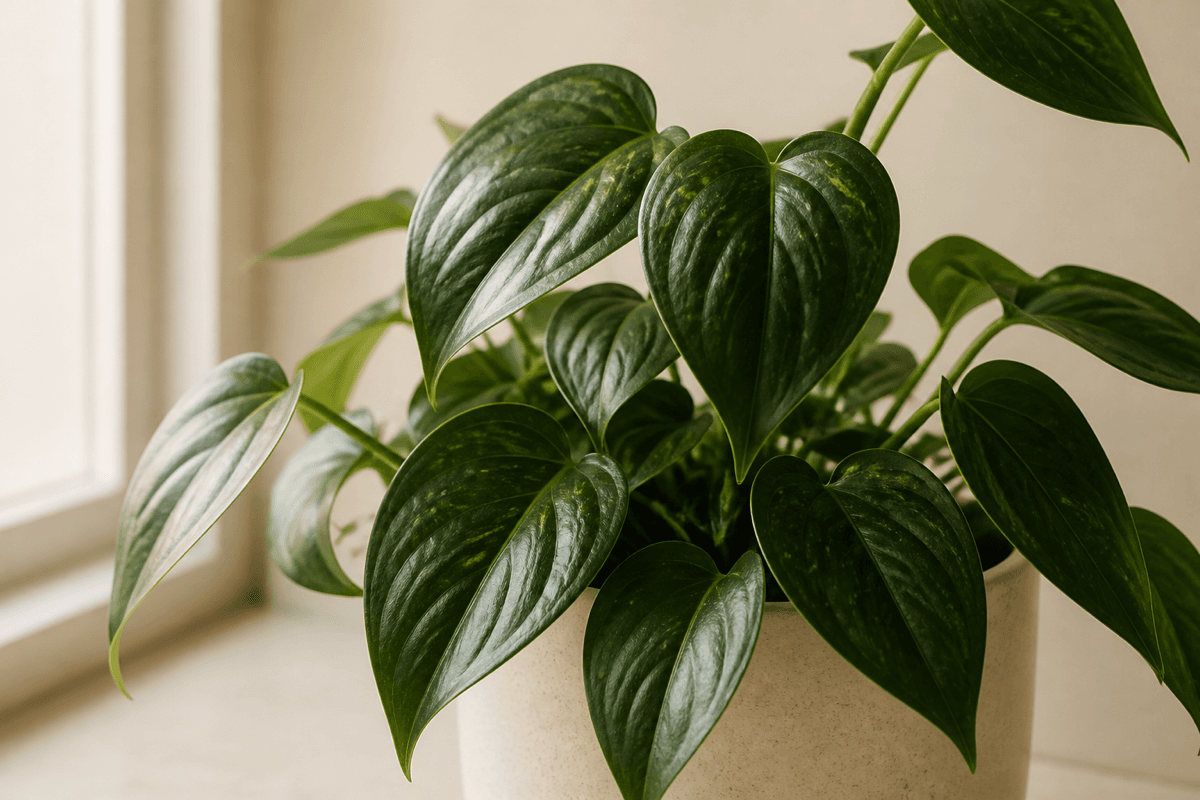
Drooping is not proof that a plant is thirsty. Check the root ball first. If it is dry, water thoroughly and drain the pot. If it is still wet, do not add water; check drainage and roots, then review recent heat or cold.
Drooping tells you that the leaves and stems are not receiving enough moisture at that moment. It does not tell you why. Iowa State University Extension identifies two opposite starting points—an overly dry root ball and a persistently wet one—so the safest first move is to inspect the pot instead of reaching automatically for the watering can.
What should you check first when a plant droops?
Use this short sequence before changing the routine:
- Feel the potting mix below the surface. Decide whether the root ball is dry, still moist, or persistently wet. Do not judge from the leaf posture or the surface color alone.
- Lift the pot if you know its usual weight. Potting mix becomes lighter as a plant uses water, so a lighter-than-usual pot strengthens the dry-soil evidence.
- Check where excess water goes. Look for an open drainage hole, then empty standing water from a saucer or outer pot.
- Review what changed. Note recent heat, cold, a draft, a brighter location, or an unusually fast drying cycle.
- Look for corroborating signs. Inspect the roots when wet-soil evidence persists, and check leaf undersides and stem joints for visible pests or webbing.
The free plant care check walks through soil, leaves, and drainage without collecting your answers. Use the existing overwatered-versus-underwatered guide when you need the fuller wet/dry comparison.
Which branch fits the evidence you have?
| What you find | A constrained next step | What would make you investigate further |
|---|---|---|
| The root ball is dry and the pot is lighter than usual | Water the whole root ball thoroughly and let excess water drain | Water runs down the pot wall without wetting the mix, the pot dries unusually fast, or roots tightly fill the container |
| The root ball is still wet or the pot sits in standing water | Do not add water; empty standing water and confirm that the container can drain | Wilting persists, the mix stays saturated, or roots are dark and soft |
| The root ball is evenly moist at the species-appropriate depth, with no standing water | Hold off on reflex watering and review recent heat, cold, drafts, or a sudden light change | The whole plant keeps declining, roots look damaged, or pest or disease signs appear |
This is a triage path, not a diagnosis. Several factors can coexist, and each species has its own moisture and temperature range.
What should you do when the root ball is dry?
Water thoroughly enough to moisten the full root ball and allow excess water to leave the container. Empty the tray afterward. A severely dry mix can pull away from the pot and send water around the root ball instead of through it; in that case, University of Maryland Extension notes that several applications may be needed to rehydrate the mix.
Do not turn one dry episode into a universal schedule. Potting mix, container type, temperature, humidity, growth stage, and the plant itself all change how quickly water is used. Check the evidence again next time rather than assuming the same number of days will always work.
What should you do when the mix is still wet?
Do not add water simply because the foliage is drooping. Empty any standing water and make sure the drainage hole is open. Iowa State University Extension lists frequent watering, no drainage hole, standing water, broken-down compacted mix, and an oversized container among reasons a root ball can stay wet.
University of Maine Cooperative Extension explains why the symptom can be confusing: excess moisture or poor drainage reduces aeration, which can restrict or kill roots. With fewer functioning roots, the plant may wilt even while the mix remains wet.
Wet soil alone does not prove root rot. If the plant keeps wilting in wet mix, move to a careful root inspection rather than naming a disease from the leaves.
When should you inspect the roots or container size?
Gently inspect the root system when wilting persists despite wet mix, or when the plant dries much faster than it used to. University of Maryland Extension describes healthy roots as generally light-colored and firm; diseased roots appear dark and soft. University of Maine gives a similar contrast between firm, white roots and brown, mushy, or soft roots.
A different container problem can happen on the dry side. Iowa State lists a pot-bound plant as one reason the root ball may dry too quickly. NC State Extension notes that frequent wilting between waterings can occur when a plant is in a container too small for its root system. A densely filled root ball or roots pushing out of the pot are separate signs that the plant may need more space.
Root color and texture are useful evidence, but they do not identify a specific pathogen. Use plant-specific extension guidance or a local diagnostic service before applying a disease treatment.
What if soil moisture does not explain the droop?
Review the timing and the plant's immediate environment:
- A hot-day change can be temporary. University of Maryland Extension notes that a plant with ample soil moisture can wilt when leaves lose moisture faster than roots can replace it, then firm again later as conditions ease. That is a reason to check the mix—not a reason to add water automatically.
- Temperature extremes can cause wilting. NC State Extension lists both excessively low and high temperatures among causes of wilt and recommends noticing indoor microclimates near sunny windows, inefficient glass, exterior doors, and hot or cold air.
- A sudden move into stronger light can injure foliage. University of Maine reports that excess light can contribute to wilt and that abrupt increases in light are more likely to damage a plant. Ordinary low light is better associated with weak growth, yellowing, or leaf drop than with an immediate droop.
- Pest signs change the investigation. University of Maryland Extension associates faded, yellowed, browned, or wilted foliage with pests including aphids, spider mites, mealybugs, whiteflies, and scale. Look for visible insects, fine stippling or webbing, cottony material, or raised bumps before choosing a control.
Avoid jumping straight from one clue to a treatment. A recent environmental change, a root problem, and a watering problem can occur together.
What should you record before changing care?
Write down the date, moisture condition, pot weight, drainage condition, which parts of the plant drooped, and any recent environmental change. Then record one response and what you observe at the next check. That creates a clearer comparison than “plant looked thirsty” and helps prevent several changes from obscuring the result.
For a repeatable observation routine, read how to schedule the check instead of the watering. If paper tracking fits your process, browse the current plant-care planners and growth trackers; current product details, availability, and checkout remain on Etsy.
The takeaway
Treat drooping as a prompt to inspect, not as an instruction to water. Check the root ball and drainage first. Take the dry-soil or wet-soil branch only when the pot supports it. If moisture does not explain the symptom, review recent temperature and light changes, inspect the roots, and look for corroborating pest signs before deciding what to do next.
Quick answers
- Can heat make a well-watered plant droop?
- Yes. On a hot day, leaves can lose moisture faster than roots replace it even when soil moisture is ample. Check the root ball before adding water; a temporary hot-day wilt is not proof that the pot is dry.
- Why does my plant keep drooping between waterings?
- A root ball that dries unusually fast can reflect incomplete watering, a porous or undersized container, or a pot-bound plant. Wet the full root ball when watering, then check whether roots densely fill the pot or emerge through drainage holes.
- When should I inspect the roots of a drooping plant?
- Inspect the roots when wilting persists while the root ball remains wet or when the plant no longer responds as expected after correct watering. Healthy roots are generally light-colored and firm; dark, soft, or mushy roots are evidence of a root problem, not a complete pathogen diagnosis.
Sources consulted
The editorial team used the following university extension, government, or official platform documentation for the factual guidance on this page. Plant needs still vary by species and growing conditions.
- Iowa State University Extension: Diagnosing Houseplant Problems from Improper Environmental Conditions
- University of Maryland Extension: Drought Stress to Indoor Plants
- University of Maryland Extension: Diagnose Indoor Plant Problems
- University of Maryland Extension: IPM—Prevent, Identify, and Manage Plant Problems
- University of Maine Cooperative Extension: Dealing with Houseplant Problems
- NC State Extension Gardener Handbook: Plants Grown in Containers